
Case Study 01
Fleet Management SaaS
A production-ready fleet management SaaS for logistics companies: vehicle tracking, driver compliance, maintenance forecasting, and real-time team collaboration.
Type
SaaS / Fleet Management
Timeline
1 month
Market
France / Francophone Europe
Scope
Design + Full-stack Dev
Problem
Fleet managers at small and mid-size companies run their day out of spreadsheets, WhatsApp groups, and aging desktop software. Nothing talks to anything else, and mistakes slip through.
Two people book the same vehicle because nobody sees the same schedule
A missed contrôle technique or an expired driver document turns into a compliance problem
Nobody knows what maintenance is actually costing over time
When something goes wrong, there's no record of who changed what
Existing fleet software is built for large enterprises or too generic for French rules. There was no modern, affordable option for French fleet operators, so we built one.
Design
One screen that answers the big questions
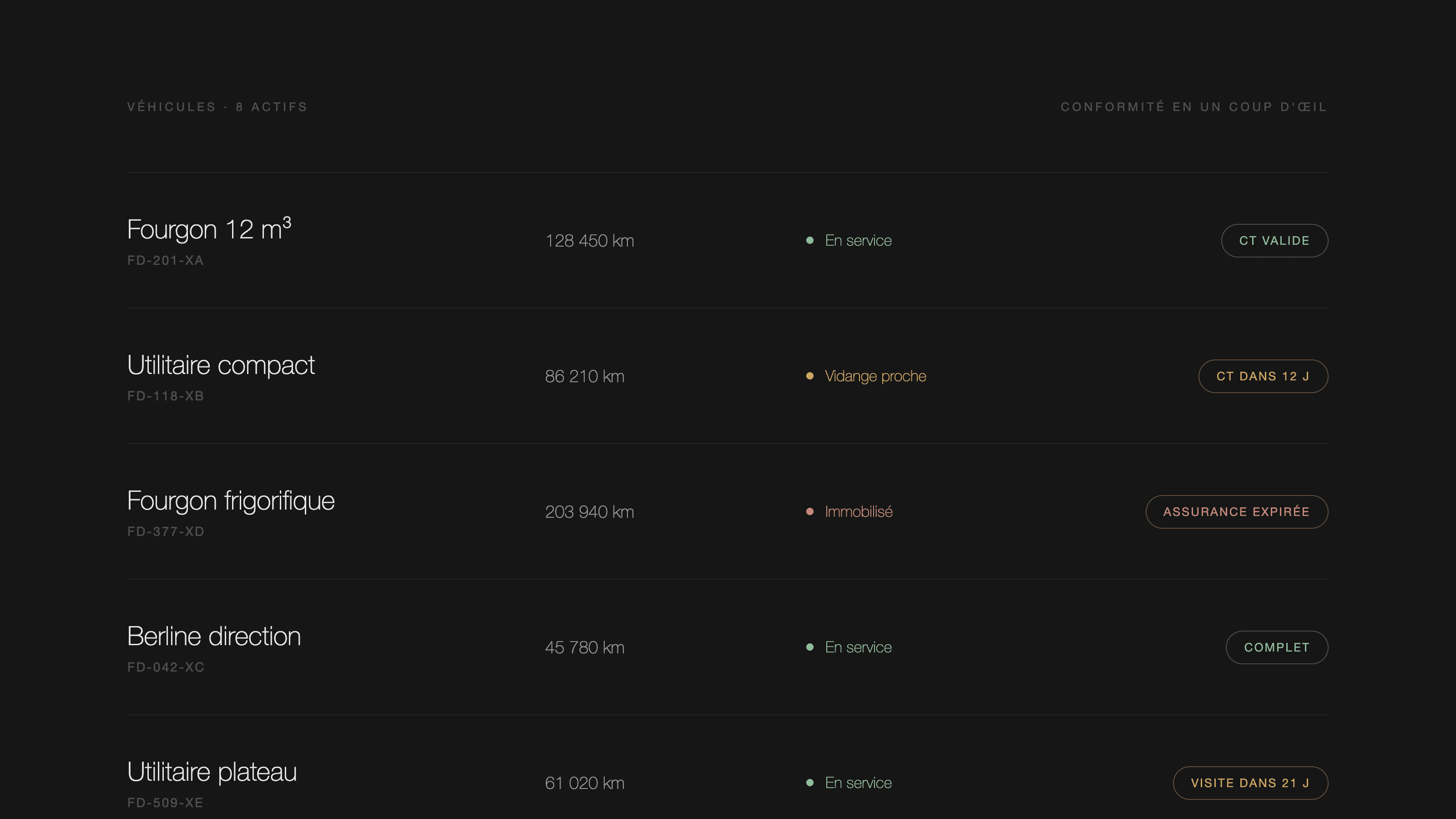
The dashboard is designed so a manager can tell in under 10 seconds which vehicles need attention, which drivers have documents about to expire, and how the fleet is being used. Color-coded alerts and live charts do the work.
Compliance comes first
French operators live with specific paperwork: carte grise validity, contrôle technique cycles, driver medical certificates. The platform treats expiration dates as a core part of the interface, with badges, countdowns, and warnings that arrive well before anything lapses.
You never lose your place
Smaller actions, like logging maintenance or uploading a document, open in a panel over the current screen, so you stay where you are and navigation stays simple.
A blank account tells you what to do
Every empty screen suggests a concrete next step, such as adding your first vehicle. New accounts get up and running noticeably faster.
Key Features
No More Double-Booking
When a vehicle is assigned to someone new, the old assignment closes automatically. Two people can never book the same vehicle.
Maintenance, Predicted
The platform looks at past services and intervals and tells you what's coming due. A traffic-light status on the dashboard replaces manual tracking.
Documents That Warn You
Every driver and vehicle has its own document folder. As expiration dates approach, color-coded alerts appear so nothing lapses quietly.
Everyone Sees the Same Thing
When a teammate makes a change, everyone sees it instantly, no refresh needed.
A Team Account That Stays Tidy
Admins invite collaborators by email. Each person only ever sees their own company's data.
A Record of Every Change
Every action is logged with who did it and when, without ever slowing anyone down.
How It's Built
The platform is a web application your team opens in the browser, with nothing to install. It runs on the same class of tools used by fast-moving SaaS companies (React for the interface, Supabase for the data, Stripe for billing), which keeps it quick to evolve and inexpensive to run. Data is stored securely in the cloud and updates in real time for everyone.
Under the Hood
One source of truth for data
All the logic for reading and saving fleet data lives in one place, so the app behaves consistently and new features are quick to add.
Live updates, done properly
Changes flow through one central update system, which is why everyone's screen stays in sync without refreshing.
No half-loaded screens
The app waits until all your data is ready before showing the interface, so you never land on a page that is still filling itself in.
What We Learned
Warnings beat alerts
Nobody wants to hear a document has already expired. They want 30 days of notice. Building that early-warning logic into the foundation of the product was the right call.
Team invitations are harder than they look
Inviting a colleague sounds simple, but there are many edge cases: the person already has an account, joins the wrong company, or clicks an old invite link. Each case got its own clear screen with an obvious way forward.
Live updates raise the bar
Once people see changes appear instantly, anything slower feels broken. Committing to real-time collaboration meant committing to it everywhere.